
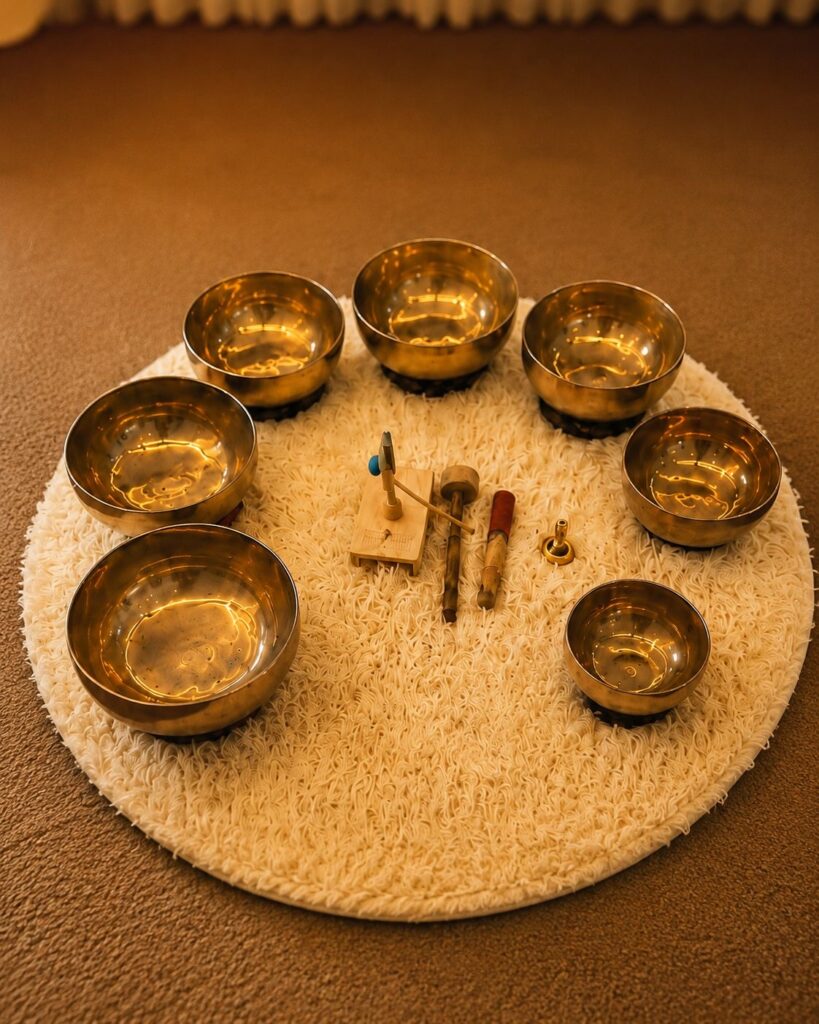
Sound Healing: The Ancient Art of the Singing Bowl
Long before modern wellness retreats and meditation apps, cultures across the Himalayas were already tapping into the healing power of sound. Singing bowls, believed to have originated in Tibet, Nepal, and Bhutan over 2,000 years ago, were traditionally used in Buddhist and Hindu spiritual practices for meditation, prayer, and ceremonial rituals. Crafted from a blend of metals (often including copper, tin, and trace amounts of other elements), each bowl produces a distinct resonant tone when struck or played with a mallet along its rim.
Some historians trace their origins even further back to the Bronze Age, though their spiritual and therapeutic use became most prominent in Tibetan monastic life, where monks used them to deepen meditative states and mark the rhythm of daily rituals. Today, that centuries-old tradition has found new relevance in modern sound therapy and holistic wellness practices worldwide.
How It Works
A singing bowl session, often called a “sound bath,” involves lying or sitting comfortably while a practitioner plays a series of bowls around and near the body. The resulting vibrations and tones are thought to influence brainwave activity, guiding the mind from an alert, active state into a slower, more relaxed one — similar to the state achieved during deep meditation.
Reported Benefits
While scientific research on sound healing is still developing, many practitioners and participants report the following benefits:
- Stress and anxiety reduction — the slow, rhythmic tones help activate the body’s relaxation response
- Improved sleep quality — many describe feeling calmer and more rested after a session
- Enhanced mental clarity and focus — the meditative state can help quiet mental chatter
- Physical relaxation — some feel the vibrations release tension held in the muscles
- Emotional release — the immersive experience can create space for processing emotions
Why It’s Worth Trying
In a world of constant stimulation, sound healing offers something increasingly rare: permission to slow down and simply listen. Unlike more active wellness practices, no experience or flexibility is required — participants can lie back and let the sound do the work. It pairs naturally with travel and nature-based experiences, where the absence of everyday noise allows the vibrations to resonate more fully.
Whether approached as a spiritual practice, a relaxation technique, or simply a new sensory experience, the singing bowl continues to offer what it has for centuries: a moment of stillness in an often noisy world.