
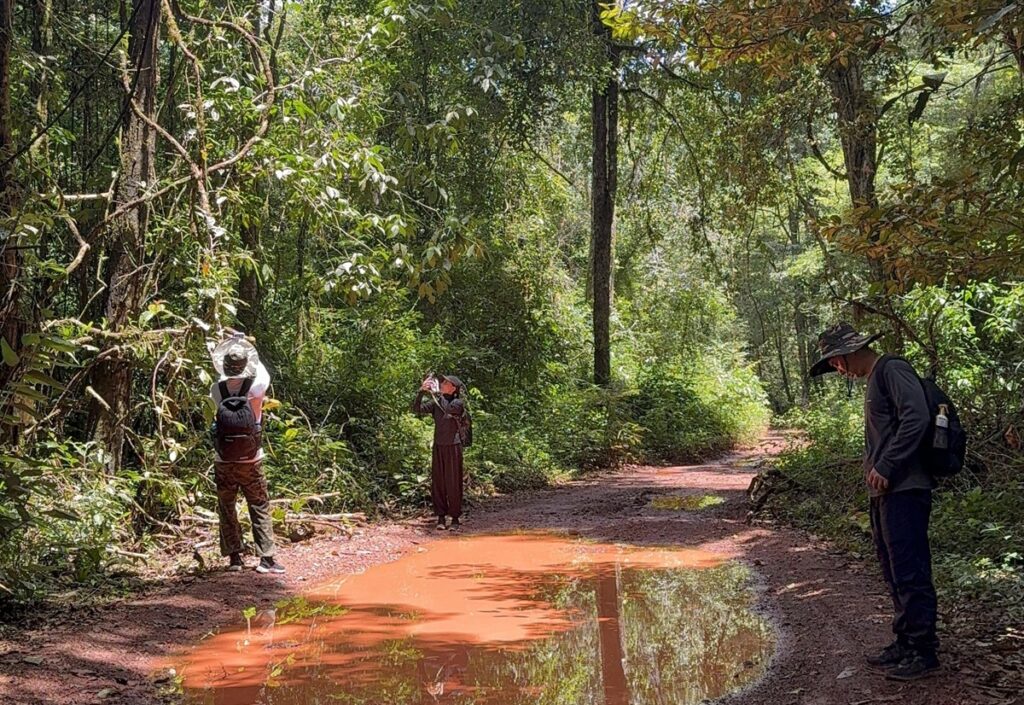
Everything you need to know before visiting Brownsberg Nature Park. Trails, waterfalls, wildlife, entrance fees, how to get there, and where to sleep on the plateau. A local guide’s honest guide.
If there is one place in Suriname that turns a curious traveller into a rainforest believer, it is Brownsberg. I’ve walked these trails more times than I can count; with first-time visitors clutching their cameras at the first howler monkey call, with researchers chasing frog species, with families who thought a “jungle hike” meant a paved path and quickly learned otherwise. Brownsberg has a way of humbling and delighting people in the same afternoon, and that’s exactly why it remains the most visited nature park in the country.
This guide is everything I wish every visitor knew before they made the trip up the mountain: what the park actually is, how to get there without wasting a day, which waterfalls are worth the mud on your boots, where to sleep if you want the full experience, and what nobody tells you about visiting Suriname’s most iconic plateau.
What Is Brownsberg Nature Park?
Brownsberg Nature Park sits on a bauxite plateau roughly 500 metres above sea level in the Brokopondo District, about 130 kilometres south of Paramaribo. The park lies 150 km south of the capital, Paramaribo, and consists of a lateritic plateau, which at 530 m forms the top of the Brownsberg range, lying 473 m above the surrounding lowlands. That elevation is what makes Brownsberg special; you get genuine rainforest cover, cooler air than the coast, and sweeping views over the Brokopondo Reservoir (officially the Professor Dr. W.J. van Blommesteinmeer) that you simply cannot get anywhere else this close to the capital.
The park was established to protect this plateau ecosystem and has become Suriname’s flagship example of accessible ecotourism. Numbers vary slightly by source, but the park spans somewhere in the range of 6,000 to 12,000 hectares of protected forest, savanna, and wetland, and it’s managed today by STINASU, Suriname’s national nature conservation foundation.
Why does it matter that Brownsberg exists at all? Because the reservoir below it tells a story most tourists never hear. In the 1960s, Suriname dammed the Suriname River to power the bauxite industry, flooding an enormous stretch of forest and displacing thousands of Maroon and Indigenous residents in the process. What’s left is one of the largest man-made lakes in the world, with the ghostly remains of drowned trees still visible in places. Brownsberg, spared from the flooding, became a refuge for wildlife pushed out of the valley below; which is part of why the biodiversity here is so concentrated in such a small area.
The Geology Behind the View
Brownsberg’s remarkably flat summit isn’t an accident of erosion; it’s a bauxite plateau, and that mineral history explains a lot about why this particular hill became important long before ecotourism existed. Small-scale bauxite and gold prospecting took place here well into the twentieth century, drawn by the same lateritic soil that today supports the park’s distinctive low forest and Myrtaceae-dominated patches on the plateau’s crust. Today, industrial extraction is banned within the park’s boundaries, though it’s worth being honest with visitors that gold mining activity continues in parts of the wider Brokopondo region outside the protected area; occasionally audible, occasionally visible, a reminder that conservation in Suriname exists alongside real economic pressures rather than in a vacuum.
That layered history is actually part of what makes a guided visit so much richer than a solo walk-through. A good guide won’t just point out a howler monkey — they’ll explain why the plateau formed the way it did, why the reservoir below looks the way it does, and why certain trails feel so different from one another depending on soil type and elevation.
Getting to Brownsberg from Paramaribo
The drive itself is part of the adventure. Expect roughly 3 to 4 hours from Paramaribo depending on traffic and road conditions. The first stretch is smooth, paved road through Brokopondo District, but the last 12 to 13 kilometres up to the park headquarters is an unpaved, sometimes steep forest road that is really only passable comfortably with a 4×4.
You have three realistic options:
1. Book a guided day tour. This is by far the easiest route, especially for first-time visitors to Suriname. A guide handles the 4×4 transport, park entrance ticket, breakfast, lunch, and water, and critically knows which trails are worth your energy that day depending on rain and wildlife activity. A typical Brownsberg day trip departs Paramaribo around 6:30 AM, arrives around 11:00 AM for briefing and check-in, spends the morning descending to two or three waterfalls, has lunch at a viewpoint over the lake, does a short plateau walk in the afternoon, and returns to Paramaribo between 7:00 and 8:00 PM.
2. Arrange private transport with a driver. Faster and more flexible than a group tour, but you’ll want a driver who genuinely knows the road — this isn’t the place to test an unfamiliar rental car.
3. Go independently by public transport. It’s possible, and some backpackers swear by it, but be prepared for real uncertainty. Buses to Brownsweg leave from Paramaribo, and from there you’ll need to negotiate a ride up the final stretch with locals or park staff. Departure times are informal and not always reliable, so build in flexibility if you go this route.
Whichever option you choose, start early. Wildlife in Brownsberg — like most rainforest parks — is far more active at dawn and dusk. Arriving at midday for a rushed visit is the single biggest reason people leave disappointed.
Entrance Fees and Costs
Prices at Brownsberg are modest by international standards, though they do vary depending on whether you go independently or as part of a tour package.
Independent entrance fee: roughly SRD 300 – 500 for adults, with a smaller fee for children and a separate small parking charge.
Guided day tours: typically €95 per person all-inclusive, covering 4×4 transport, breakfast, lunch, water, park entrance, and a Surinamese guide.
Overnight stays: hammock space runs roughly €25 per person per night; cabin or lodge beds cost more, generally landing between $25 and $100 USD depending on comfort level.
Meals on site: basic Surinamese meals are not at the on-site. You have to bring your own food.
A quick note on transport costs: because of the rough final stretch of road, private taxis or shuttles from Paramaribo can run $50–100 USD depending on group size, which is often why joining a shared tour ends up being both cheaper and less stressful than going it alone.
The Waterfalls: Which Ones to Hike
Brownsberg’s three signature waterfalls are the reason most people come, and honestly, they’re worth building your whole day around.
Leo Falls is the most accessible and the one most families and less experienced hikers tackle. It’s a manageable descent and a reliable spot to cool off after the walk down.
Irene Falls requires more effort but rewards you with a genuinely beautiful cascade tucked into dense forest — many guides and repeat visitors consider it the most photogenic of the three.
Koemboe Falls, on the Witi Creek, rounds out the trio. Most day tours manage two of the three waterfalls in a single visit; doing all three in one day is possible but requires good physical condition and an early start.
A practical tip from someone who has walked these trails more times than they’d like to admit: the descent is the easy part. It’s the climb back up, often in humidity that makes your shirt feel like it’s been through a washing machine, that separates the trails suited for casual walkers from the ones that need real stamina. If you’re travelling with kids around 8–10 years old, Leo Falls alone makes for a satisfying, manageable adventure without overextending anyone.
Trails and Hiking Options
Beyond the waterfall routes, Brownsberg has a genuine network of trails ranging from short, flat strolls to steep, technical climbs:
Short viewpoint walks; a matter of minutes from the park headquarters, leading to lookout points over Brokopondo Lake. Perfect if you’re short on time or energy but still want that money-shot view.
The Brownsberg Summit Trail; steep, uneven, and muddy in sections, but rewarding for hikers who want a proper workout along with their wildlife spotting.
Longer ridge and forest bushwalks; an hour or more, winding through varied terrain including flat sections, rocky patches, and steep inclines.
Trail conditions change fast with rain, and Brownsberg gets plenty of it. What looks like a manageable dirt path in the morning can turn genuinely slick and root-tangled by afternoon. Proper hiking shoes with grip — not sandals, not sneakers — are non-negotiable here.
Wildlife You Might Actually See
This is where Brownsberg earns its reputation. The park holds more than 1,400 recorded plant species and hosts all eight monkey species found in Suriname. On a good morning, howler monkeys will announce themselves long before you spot them; their calls carry astonishingly far through the canopy — while capuchins and spider monkeys tend to reveal themselves more quietly, moving through the branches if you’re patient and quiet.
Birdwatchers take note: the park is home to over 250 recorded species of birds, mammals, and reptiles, including the striking Paradise tanager. Sloths, forest pigs, and various deer species are present too, though — like most rainforest wildlife — sightings depend heavily on luck, timing, and how quietly your group can move.
A word of honesty here, because I’d rather set the right expectations than oversell it: Brownsberg is not a safari. You are walking through dense forest, not scanning open plains. Some visitors see a parade of monkeys and toucans in a single morning; others see mostly leaves, footprints, and the occasional distant rustle. Going out at dawn or dusk with a guide who knows the calls and the trails dramatically improves your odds — this is genuinely one of those places where local knowledge changes the whole experience.
Where to Sleep on the Plateau
If your schedule allows it, staying overnight at Brownsberg is worth strongly considering over a rushed day trip. The wildlife-watching window at dawn alone justifies the extra night, and there’s something genuinely special about falling asleep in a hammock to the sound of the forest waking up around you.
Accommodation options at the top include:
Hammock spaces in a shared shelter — the classic budget option, and honestly, many repeat visitors prefer it. Bring your own hammock and mosquito net if you have them, or ask about rental options in advance.
Basic cabin beds in shared or private rooms with shared bathrooms — simple but functional, with cold showers being the norm rather than the exception.
Book accommodation in advance through STINASU or a tour operator rather than showing up and hoping for space, particularly on weekends when the park sees more domestic visitors.
Best Time to Visit
The park is best visited during the dry season, roughly August to November, when trails are considerably more accessible. Suriname’s rainy seasons (roughly late April through July, with a shorter rainy stretch around December to January) turn the plateau’s trails muddy and the unpaved access road more challenging, though the park remains open and hikeable year-round for those who don’t mind getting a little dirty.
If you’re chasing waterfall photography specifically, a visit shortly after rain — without hiking during an active downpour — often means fuller, more dramatic cascades than peak dry season offers. It’s a genuine trade-off between comfortable hiking conditions and dramatic waterfalls, so pick your priority.
What to Pack
– Proper closed hiking shoes with real tread — this is the single most important item
– Lightweight, quick-dry clothing (long sleeves help against insects and scratchy vegetation)
– A rain jacket or poncho, regardless of season
– Insect repellent
– More water than you think you’ll need
– A dry bag or waterproof phone case for the waterfall sections
– Cash in Surinamese dollars for entrance fees and on-site purchases
A Sample One-Day Itinerary
If you’re only giving Brownsberg a single day, here’s roughly how a well-run visit unfolds:
– 6:30 AM — Depart Paramaribo. Yes, it’s early, but this timing exists for a reason: you want to be on the plateau while the forest is still waking up.
– 11:00 AM — Arrive at the park, register at the entrance, and get briefed by your guide on trail conditions for the day.
– 11:00 AM–1:00 PM — Descend toward two of the three waterfalls, moving slowly and quietly to maximise wildlife encounters along the way.
– 2:00 PM — Lunch at a viewpoint over the reservoir, or at Witi Creek — a genuinely lovely spot to eat with your feet still damp from the falls.
– Afternoon — A shorter, flatter walk on the plateau itself, often including the classic overlook of Van Blommestein Lake.
– 4:00–7:00 PM — Drive back to Paramaribo, tired, muddy, and — for most first-timers — already planning their next trip into the interior.
If you can stretch this into two days, do it. Adding a night on the plateau means catching the dawn wildlife window without the 5 a.m. drive beforehand, and gives you enough slack in the schedule to attempt all three waterfalls rather than rushing between two.
Safety, Fitness, and Trail Etiquette
Brownsberg is beginner-friendly by rainforest standards, but it’s still a rainforest, and a few honest notes will save you a rough day:
– Fitness level matters more than people expect. The descents to the waterfalls are manageable for most reasonably active adults, but the climbs back up — often humid, often muddy — are genuinely tiring. If you have any concerns about stamina or joint issues, mention it to your guide before you commit to a route, not halfway down it.
– Rain changes everything. Trails that are a pleasant walk in dry conditions can become genuinely slippery and root-strewn after rainfall. This isn’t a reason to avoid Brownsberg in the wet season, but it is a reason to wear proper footwear and take your time on descents.
– Bring more water than seems necessary. The humidity at elevation is deceptive — you sweat more than you realise, and there’s no reliable place to refill along most trails.
– Stay with your guide or group on unmarked sections. Some of the longer bushwalks aren’t obviously marked, and it’s easy to lose a clear sense of direction under dense canopy.
– Leave no trace. Pack out what you pack in. Brownsberg’s popularity is exactly why it needs visitors who treat it with care — this is still a protected conservation area, not a theme park.
– No malaria risk in this particular region is a point local operators often mention, which offers some peace of mind, though standard insect protection against other biting insects is still very much recommended.
Nearby Attractions Worth Combining
If you have extra days built into your Suriname itinerary, a few nearby sites pair naturally with a Brownsberg visit:
– Brokopondo Reservoir (Van Blommestein Lake) — beyond the viewpoints inside the park, the lake itself offers boating and fishing opportunities and is worth exploring from the water if time allows.
– Jodensavanne — the historic remains of one of the earliest Jewish settlements in the Americas, an evocative and little-visited site not far from the Brownsberg turnoff.
– Peperpot Nature Park — closer to Paramaribo, with its own hiking trails and monkey and bird populations, useful if you want a gentler forest walk either before or after the more demanding Brownsberg hikes.
None of these require a separate long drive from Brownsberg’s route, which is exactly why a well-planned multi-day itinerary through the Brokopondo region tends to feel far more rewarding than a single rushed day trip.
Frequently Asked Questions
Can I visit Brownsberg without a tour operator?
Yes, though it takes more effort and patience. You’ll need to arrange your park entrance fee and any accommodation with STINASU in advance, then sort transport either through public buses to Brownsweg followed by a local ride up the final stretch, or a private driver. It’s very doable for experienced independent travellers, but not the smoothest option for a first visit to Suriname.
Is Brownsberg suitable for children?
Yes, with the right expectations. Shorter viewpoint walks and the Leo Falls trail are manageable for kids around 8 years and up with a reasonable fitness level. The steeper summit and longer bushwalk routes are better suited to older children and adults.
How many waterfalls should I plan to see?
Most day-trip itineraries comfortably cover two of the three — Leo, Irene, and Koemboe Falls. Attempting all three in a single day is possible but demanding, and better suited to visitors with strong fitness and an early start.
Do I need a 4×4 to get there myself?
For the final 12–13 kilometres of unpaved forest road, yes — a regular sedan will struggle, particularly after rain. This is the main reason most independent travellers still end up booking transport rather than self-driving the whole way.
What’s the biggest mistake first-time visitors make?
Arriving late morning or midday for a rushed visit. Wildlife activity drops significantly once the sun is high, so an early departure from Paramaribo isn’t just a formality — it genuinely determines what you’ll see.
Is Brownsberg Worth It?
Almost every visitor leaves Brownsberg with a story — a howler monkey chorus at 5 a.m., a slippery scramble down to Irene Falls, a sudden view of the reservoir opening up through the trees. It is not a polished, manicured park experience; the infrastructure is basic, the roads are rough, and wildlife sightings are never guaranteed. But that rawness is precisely what makes it Suriname’s most authentic introduction to the interior — a place where 93% forest cover stops being a statistic and starts being something you’re standing inside of.
For travellers with limited time in Suriname, Brownsberg remains the single best way to experience real rainforest, real waterfalls, and real wildlife without committing to the logistics of the deeper interior. For those with more time, treat it as the opening chapter rather than the whole story — a taste of what the rest of the country’s 93% rainforest cover has waiting further in.
Planning a trip to Brownsberg or the wider Surinamese interior? A local guide changes everything here — from knowing which trail is walkable after last night’s rain to recognising a distant call as a howler monkey rather than wind in the canopy. [Get in touch with Bio With Wirjo Tours](https://biowithwirjo.