
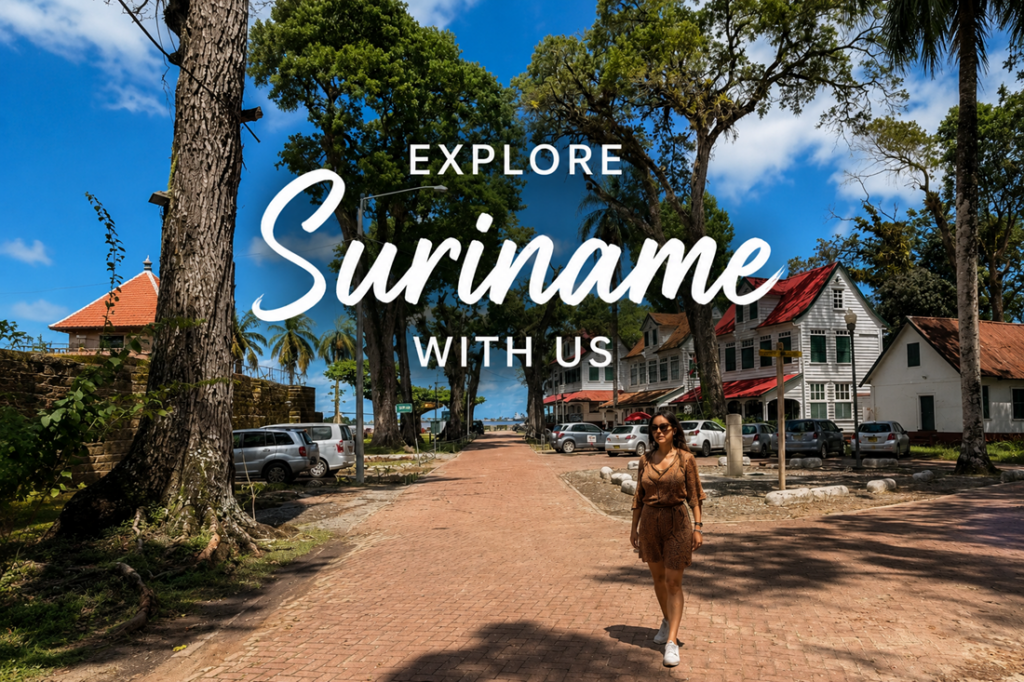
If you are packing your bags for Suriname, you aren’t just taking a vacation; you are stepping into an off-the-beaten-path frontier where Dutch colonial history meets dense, pristine Amazonian rainforest.
Here is the ultimate, hyper-practical insider’s guide to everything you need to experience.
1. Master the Capital: Paramaribo
Paramaribo is a UNESCO World Heritage site and your starting point.
The Wooden City Tour: Walk the Waterkant (waterfront) to admire the white-and-black Dutch colonial architecture. You can’t miss the St. Peter and Paul Cathedral, the largest completely wooden structure in the Western Hemisphere.
Fort Zeelandia: This 17th-century fortress offers a deep, sometimes heavy look into Suriname’s colonial and political history.
The Ultimate Symbol of Peace: Head to Keizerstraat. Nowhere else on Earth will you see a massive, beautiful mosque (Mosque Keizerstraat) sitting directly next door to a historic synagogue (Neveh Shalom) sharing a parking lot and a peaceful community.
The Markets: Dive into the chaotic Central Market for fresh maripa fruits and fish. Right next to it is the Maroon Market (often called the Witches Market); be respectful here, as locals sell traditional osodresi (bush medicine), herbs, and spiritual items.
2. Cross the River: Commewijne District
Rent a bicycle in Paramaribo, take a wooden tent-boat (corjaal) across the Suriname River, and spend a day cycling through history.
Peperpot Nature Park: A former coffee and cocoa plantation reclaimed by nature. You’ll bike under canopy trees while spotting sloths, capuchin monkeys, and giant iguanas.
Fort Nieuw Amsterdam: An open-air museum where the Suriname and Commewijne rivers meet.
Dolphin Spotting: At sunset, book a boat from Leonsberg to spot the rare, pink-bellied Guiana river dolphins playing in the estuary.
3. The Modern Wonder: Brokopondo & Brownsberg
Brownsberg Nature Park: A challenging day-trip hike through primary rainforest. Your reward? Hearing the roaring chorus of howler monkeys and reaching viewpoints that overlook the massive Brokopondo Reservoir—a flooded forest where dead tree trunks still pierce the water’s surface.
4. Go Deep Interior: The Upper Suriname River
To truly experience Suriname, you must head south to Atjoni, the literal end of the paved road. From there, you board a motorized dugout canoe to travel into the Amazon.
Maroon Culture: Stay at an eco-lodge near villages like Pikin Slee or Jaw Jaw. The Maroons are descendants of escaped African slaves who successfully fought for their freedom and preserved centuries-old West African traditions, languages, and woodcarving arts.
The Sula Experience: “Sulas” are fierce river rapids. Your guides will show you how to safely swim in them for a natural, high-intensity hydro-massage.
5. Coastline Wonders: Bigi Pan & Galibi
Bigi Pan (West): A massive mangrove wetland near Nickerie. Stay overnight in a house on stilts right in the middle of the lake. It is a birdwatcher’s paradise, famous for turning completely red when thousands of Scarlet Ibises take flight.
Galibi (East): On the border with French Guiana, visit this indigenous Carib village between February and August to witness giant Leatherback sea turtles laying their eggs on the beaches at night.
6. The Food Scene (The Best Part)
Because of its history, Suriname’s food culture is an incredible fusion.
Head to Blauwgrond in Paramaribo for Javanese Saoto soup and sate.
Visit local warungs for Hindustani roti filled with curried chicken and potatoes.
Try local Creole Pom (a baked root vegetable and chicken dish) and wash it all down with a cold Parbo Bier.