
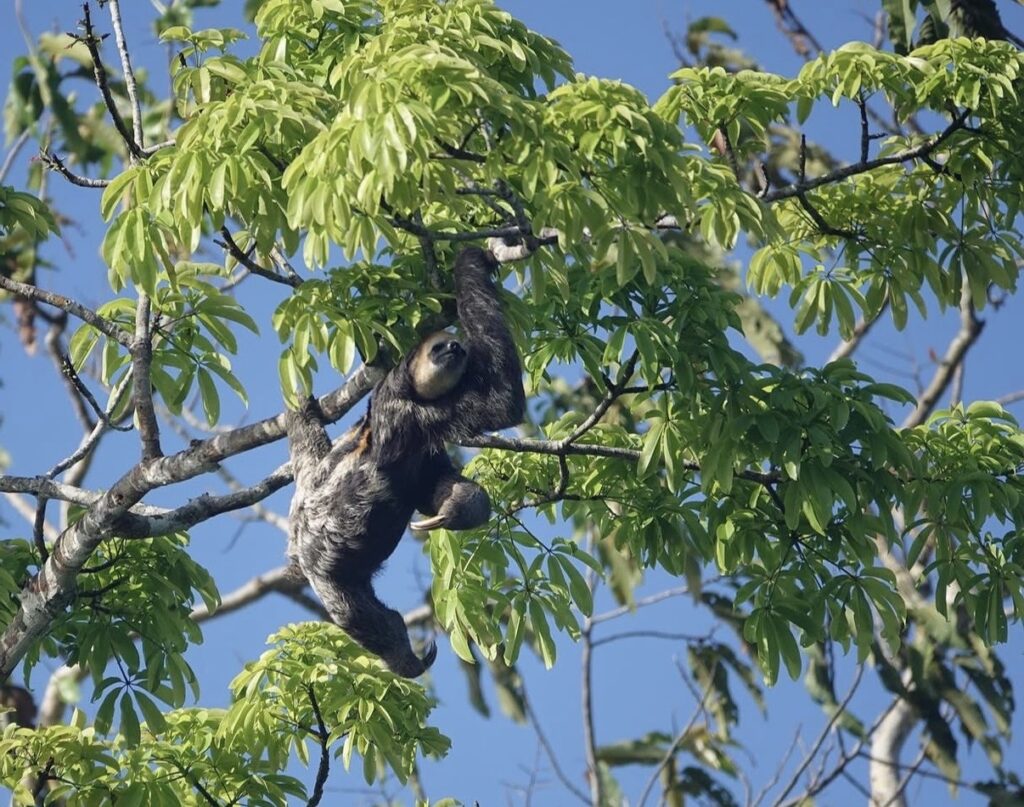
Discover where to see sloths in Suriname; easier than you think around Paramaribo and Peperpot Nature Park. A local’s guide to spotting two-toed and three-toed sloths in the wild.
If there’s one animal that makes visitors stop, stare, and reach for their cameras in slow motion, it’s the sloth. Suriname, tucked into the Amazon rainforest belt of South America, is one of the best-kept secrets for sloth watching on the continent. With over 90% of the country covered in untouched rainforest, sloths here still live exactly as they always have; hanging quietly in the canopy, far from crowds and far from cages.
If seeing a sloth in the wild is on your bucket list, here’s where to go and how to actually spot one.
Why Suriname Is a Sloth-Watching Hotspot
Suriname is home to both species found in South America: the brown-throated three-toed sloth and Linnaeus’s two-toed sloth. Here’s the twist that surprises most visitors: sloths don’t actually favor Suriname’s deep, untouched primary rainforest. They prefer secondary forest — areas that were once cleared for farming, plantations, or settlement and have since grown back with younger, more open tree cover. That means some of the easiest sloth sightings happen not deep in the jungle, but right around the capital and in the surrounding districts.
Where to Spot Sloths in Suriname
The easiest spots: Paramaribo and Peperpot Nature Park Contrary to what most travelers expect, the deep rainforest is not where you’ll have the best luck. Peperpot Nature Park, a former coffee and cacao plantation just outside Paramaribo, is one of the most reliable places in the country to see sloths — its secondary forest and old plantation trees are exactly the habitat sloths love. Within Paramaribo itself, tree-lined streets, gardens, and parks such as Cultuurtuin regularly host sloths too, often visible from ground level without any hiking at all.
The four districts around the capital: Commewijne, Saramacca, Wanica, and Para These districts ring Paramaribo and share the same mix of secondary forest, old plantations, and scattered woodland that sloths favor. Boat tours along the Commewijne River, countryside drives through Saramacca and Wanica, or a stop in Para district all offer good, low-effort chances of a sighting, often combined with other cultural or historical stops.
Brownsberg Nature Park and the Central Suriname Nature Reserve — harder than you’d think These two are Suriname’s most famous protected areas, and while they’re spectacular for birds, monkeys, and untouched rainforest scenery, sloths are actually harder to spot here. Their dense, mature primary forest isn’t the sloth’s preferred habitat, so don’t count on these reserves alone if a sloth sighting is your main goal — treat any spotting here as a bonus rather than a guarantee.
How to Actually Spot a Sloth
Sloths are masters of camouflage and stillness, so spotting one takes a slightly different technique than typical wildlife watching:
- Look up, then look for shapes, not movement. Sloths move so slowly that your eyes will naturally skip past them. Scan for a rounded, moss-colored lump wedged in a branch fork.
- Go early morning or late afternoon. These cooler hours are when sloths are most likely to shift position, making them easier to notice.
- Hire a local guide. Experienced Surinamese guides know specific trees where sloths have been seen for months or even years, since sloths are creatures of habit and rarely stray far.
- Bring binoculars. Sloths spend most of their life 20–30 meters up in the canopy, so a decent pair of binoculars makes all the difference.
- Be patient and quiet. Loud groups scare off the birds and monkeys that often reveal a sloth’s location through alarm calls.
Plan Your Sloth-Spotting Trip
Suriname rewards travelers who move slowly — fittingly enough. And in this case, the best sloth sightings don’t require a multi-day jungle expedition at all: a relaxed morning at Peperpot Nature Park, a stroll through Paramaribo, or a countryside drive through Commewijne, Saramacca, Wanica, or Para is often all it takes. Keep your eyes on the branches of the secondary forest, and you might just lock eyes with one of Suriname’s most unbothered residents.
Ready to See a Sloth for Yourself?
Want to book a trip? Visit www.biowithwirjo.com and make contact now. A local guide can take you straight to the spots where sloths are seen most often, so you skip the guesswork and get to the good part: watching one slowly wave from a branch above you.