
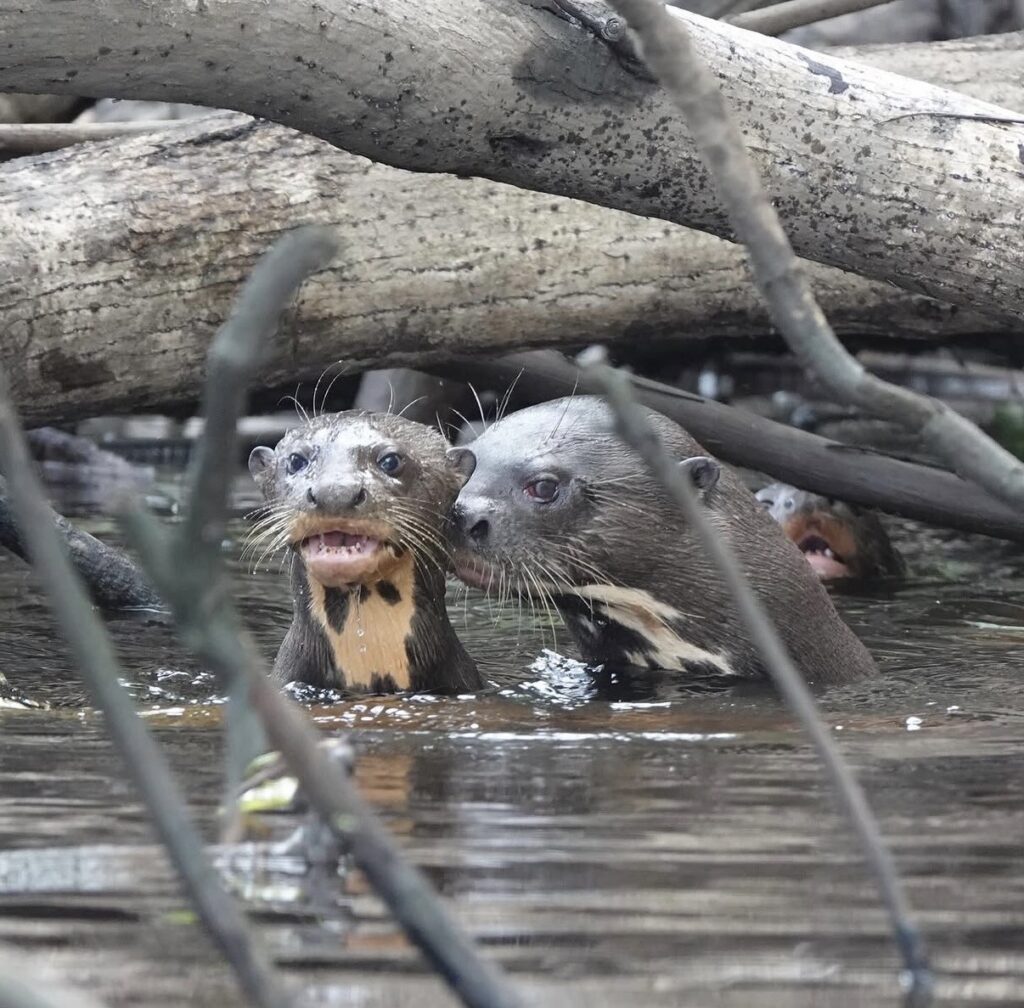
There is a moment every wildlife traveler dreams of: the water ahead breaks, a sleek brown head rises, and a pair of dark eyes lock onto yours. Seconds later, four more heads pop up beside it, all barking and huffing in alarm. You have just met a family of giant river otters and in Suriname, this encounter is more possible than almost anywhere else on Earth.
The giant otter (Pteronura brasiliensis) is the largest otter species alive, stretching up to six feet from nose to tail. Once hunted across South America for its velvety pelt, the species has vanished from 80% of its historic range. But in the Guiana Shield; the wild, thinly populated block of rainforest shared by Suriname, Guyana, and French Guiana; it has found a last stronghold. Suriname in particular remains one of the very few countries where researchers still record healthy otter densities, thanks to its enormous, largely untouched forest cover.
Where to look:
Central Suriname Nature Reserve (CSNR) is the crown jewel. This UNESCO World Heritage Site protects 1.6 million hectares of rainforest; about 10% of the entire country; including the pristine upper Coppename River. Reachable by small plane to a jungle airstrip followed by a boat journey, the Raleighvallen area rewards the effort with otters, jaguars, tapirs, and harpy eagles all sharing the same river systems.
Bigi Pan, on the northwest coast, offers an easier alternative. This vast wetland of creeks, mangroves, and lagoons is reached by car from Paramaribo to Nieuw Nickerie, then by local boat. Alongside otters, expect manatees, flamingos, scarlet ibises, and the striking blue-and-yellow macaw gliding over the swamp palms.
Coppename Wetlands, further inland, add another rich otter habitat shared with capybaras and countless fish species that make up the otters’ daily catch.
Beyond these well-known reserves, several of Suriname’s quieter rivers are also proven otter territory. The Maratakka River, a remote tributary in the northwest, the Coesewijne River, winding through swamp forest closer to the coast, and the Nickerie River, near the western border with Guyana, all shelter resident otter families. These waterways see far fewer visitors than Bigi Pan or the CSNR, making them appealing for travelers who want a quieter, more off-the-beaten-path otter encounter — though they typically require a local guide and boat arranged in advance.
When to go: The dry season, roughly August to November (with a shorter dry spell February to April), is prime time. Lower water levels concentrate fish — and otters — into smaller channels, making sightings far more likely, and jungle roads become passable again.
Giant otters live in tight, noisy family groups of three to eight, hunting together in daylight and fiercely defending their territory. Watching them fish, groom, and squabble along a black-water creek, with the forest silent except for birdsong, is the kind of encounter that stays with you long after the trip ends.
Suriname will not stay this wild forever. Conservationists have called the Guianas the species’ last true stronghold in South America; a fragile privilege that makes visiting now, respectfully and with local guides, all the more meaningful. Come see one of the continent’s rarest mammals while its rivers are still theirs.